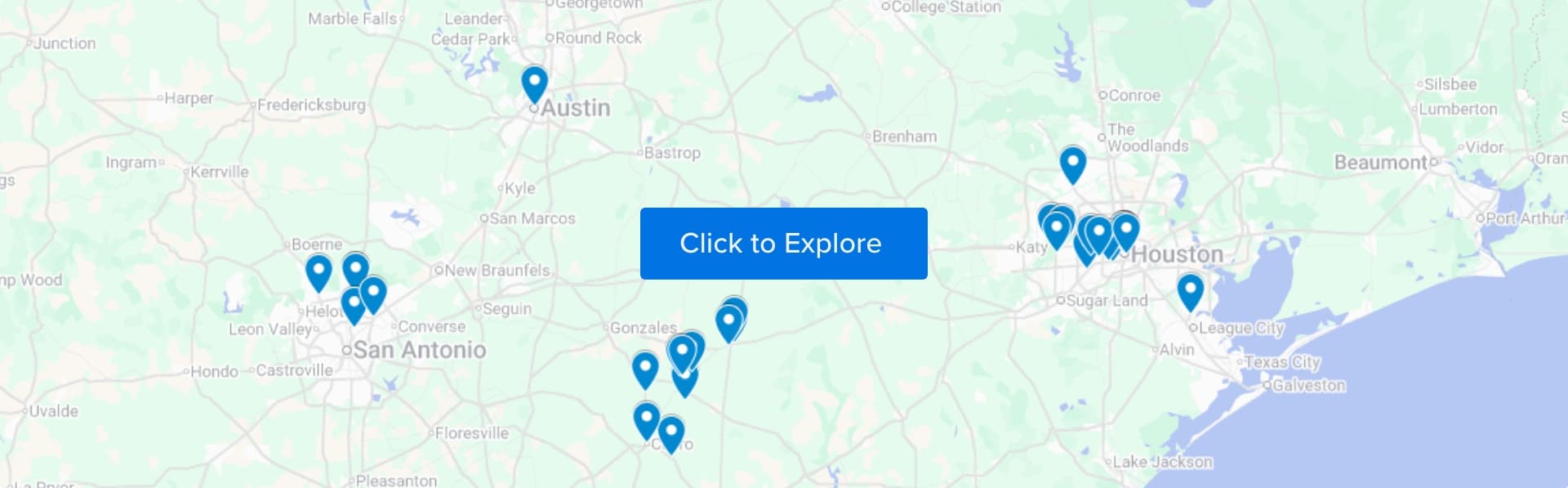
Yoakum sits near the boundary of Lavaca and DeWitt Counties in South Texas — both key players in the Eagle Ford Shale, one of the largest and most active oil and gas formations in the United States. The Eagle Ford stretches from the Mexican border up through East Texas and is particularly productive in DeWitt County.
DeWitt County: Eagle Ford Hotspot
- DeWitt County is one of the top-producing counties in the Eagle Ford Shale.
- The area is rich in oil, natural gas, and condensate production.
- Operators: Major producers include EOG Resources, Marathon Oil, ConocoPhillips, and Devon Energy.
- Drilling Focus: High returns on horizontal drilling and hydraulic fracturing (“fracking”) have made DeWitt County a long-term hub.
- Infrastructure: The county is supported by pipeline networks, processing plants, and storage facilities.
Lavaca County: Growing Activity
- Lavaca County is slightly less productive than DeWitt but still active in the Eagle Ford’s northern oil window.
- Operators: Includes EOG Resources, SM Energy, Penn Virginia, and smaller independents.
- There’s an emphasis on liquids-rich gas and light crude oil.
- Activity fluctuates with market prices, but Lavaca remains a secondary target for major players.
Yoakum: Strategic Position
- Yoakum is located on the county line and acts as a regional service and logistics hub.
- While no major wells are directly in the city limits, service companies, pipe yards, trucking, housing, and equipment suppliers support nearby operations.
- Economic benefits: jobs, tax revenue, and increased demand for services (e.g., housing, food, construction).
Economic Impact & Employment
- Oilfield Services: Many residents work in drilling, completions, trucking, and plant operations.
- Royalty Income: Landowners in rural parts of Lavaca and DeWitt receive royalties.
- Tax Revenue: Oil & gas contributes significantly to local schools, road maintenance, and emergency services.
- Boom-Bust Cycles: The area is affected by global oil prices, with drilling activity rising and falling accordingly.
Recent Trends (as of 2024–2025)
- Stabilized Production: After a dip in COVID years, activity has rebounded modestly, focused on capital efficiency rather than volume.
- Carbon Capture & ESG: Companies are beginning to implement environmental safeguards, including reduced flaring and carbon management practices.
- Automation & Drones: Increasing use of technology for monitoring wells and pipelines.
Yoakum, Lavaca, and DeWitt Counties remain integral to South Texas’s oil and gas economy, especially through the Eagle Ford Shale. While DeWitt County leads in production, Yoakum plays a vital role as a service and workforce center, and Lavaca County contributes to ongoing exploration and drilling.
Fueling the Future:
Yoakum’s Strategic Role in the Eagle Ford Shale
Situated at the crossroads of Lavaca and DeWitt Counties, the City of Yoakum, Texas, stands at the heart of one of the nation’s most productive oil and gas regions: the Eagle Ford Shale. This globally significant geologic formation has transformed the local economy, bringing jobs, investment, and infrastructure to the region.
While DeWitt County is a top-tier oil producer and Lavaca County contributes valuable natural gas and oil reserves, Yoakum serves as a vital operations and logistics hub, connecting workforce, services, and supply chain networks across South Texas.
With close access to major operators such as EOG Resources, Marathon Oil, and ConocoPhillips, and supported by a skilled workforce and pro-business environment, Yoakum is ideally positioned for continued energy sector growth.
Key Advantages:
- Proximity to high-output Eagle Ford production zones
- Access to a trained oilfield workforce and support industries
- Strong municipal infrastructure for industrial growth
- Centrally located for transport, housing, and logistics
- Local tax and land-use incentives for energy-sector businesses
Oil & Gas near Yoakum